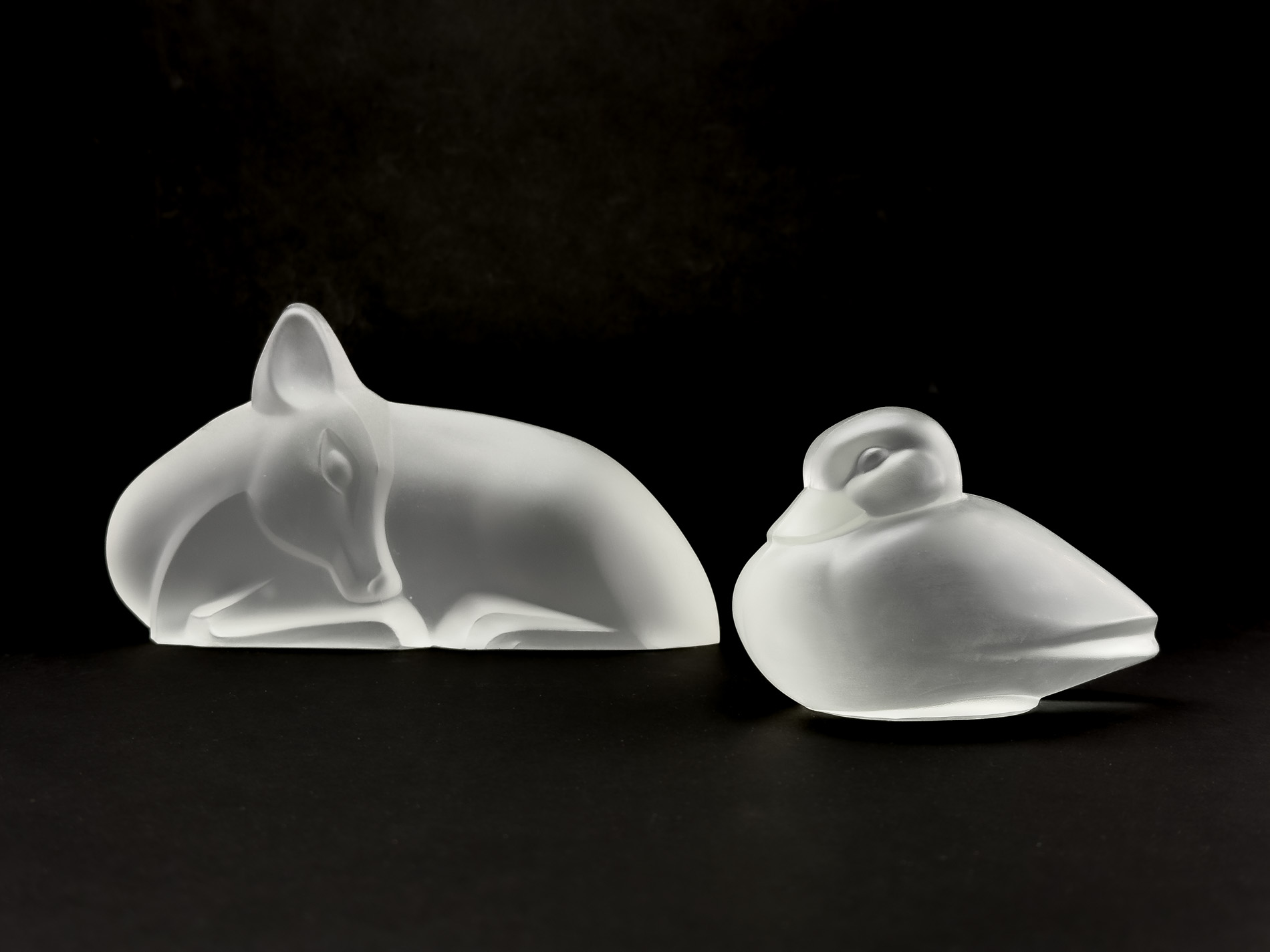
Lucienne Bloch (1909–1999) was a Swiss-American artist best known as a muralist, sculptor, and designer. In the 1930s she worked closely with Diego Rivera and played a crucial role in documenting his famous—and controversial—Rockefeller Center mural, which was later destroyed. Thanks to Bloch’s photographs, this important work has been preserved for art history. Alongside her large-scale, monumental projects, Bloch had a strong affinity for smaller, refined objects in which her sense of form, humor, and elegance is clearly expressed, particularly her glass animal figures.
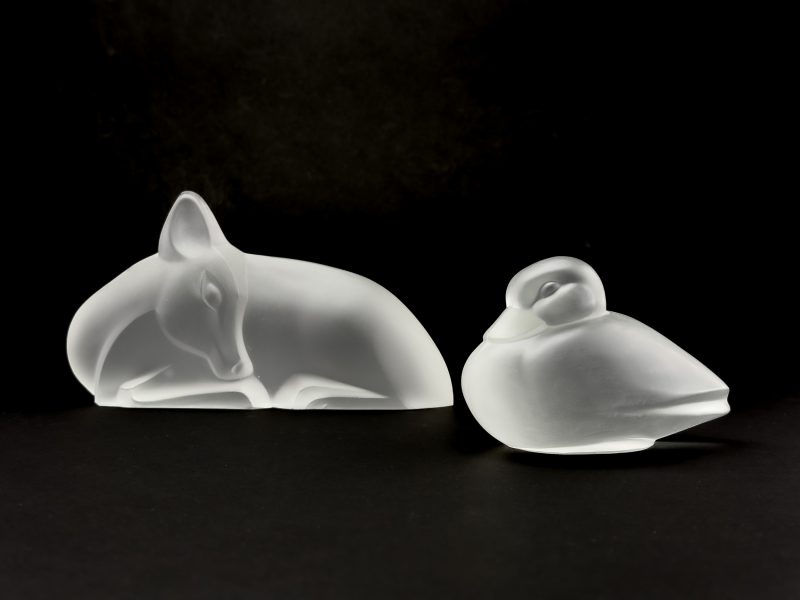
What makes these objects so appealing is the combination of simplicity and personality. With minimal means, Bloch succeeded in creating animals that are instantly recognizable yet full of character. There is a story that Lucienne Bloch liked to say animals were the best models because they never complained about long poses and always remained themselves. Whether this is true or not, it is easy to believe when looking at this deer and duck: they appear perfectly content, quiet, subtly humorous, and marked by the timeless elegance that defines Bloch’s work.
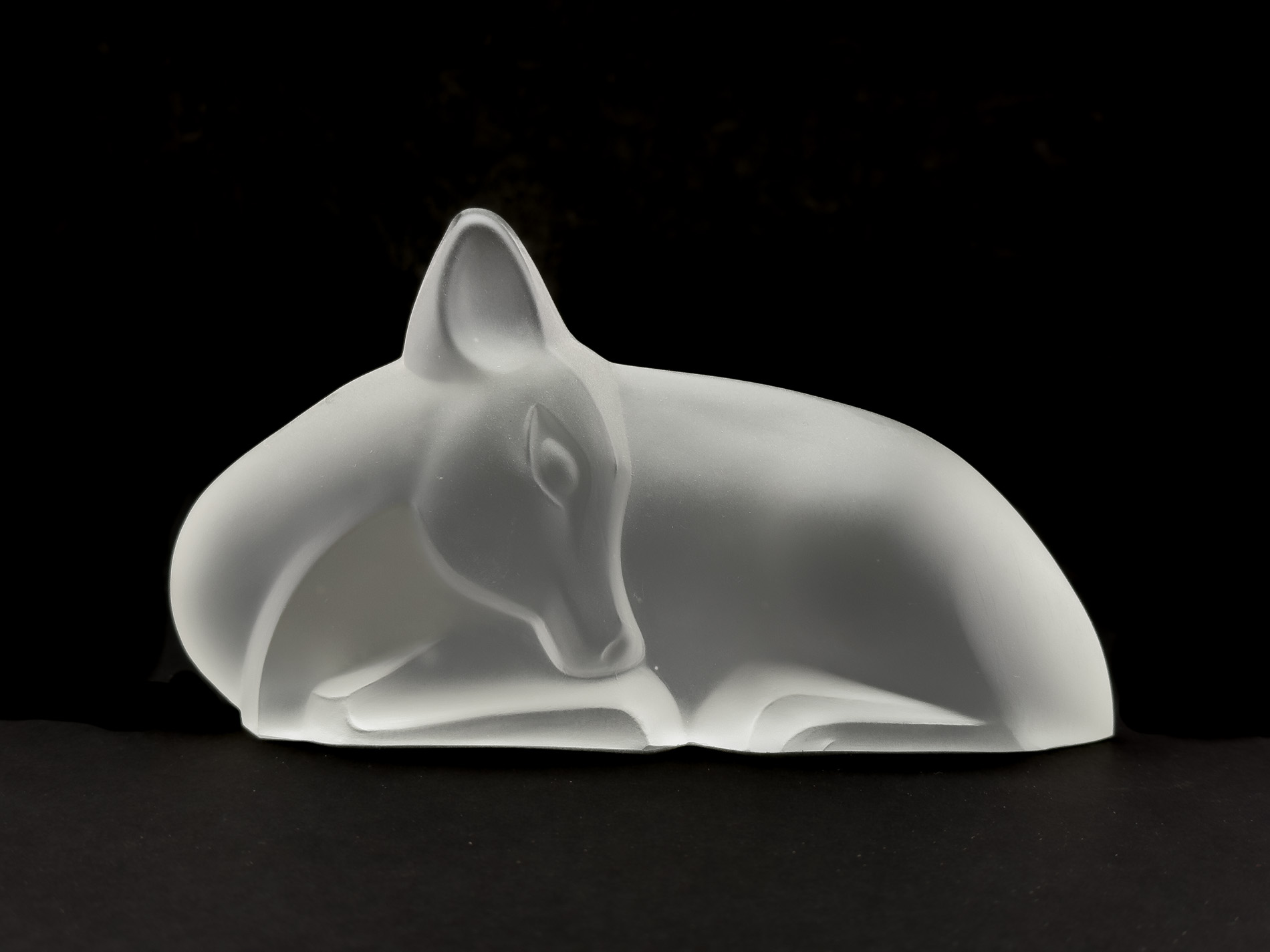
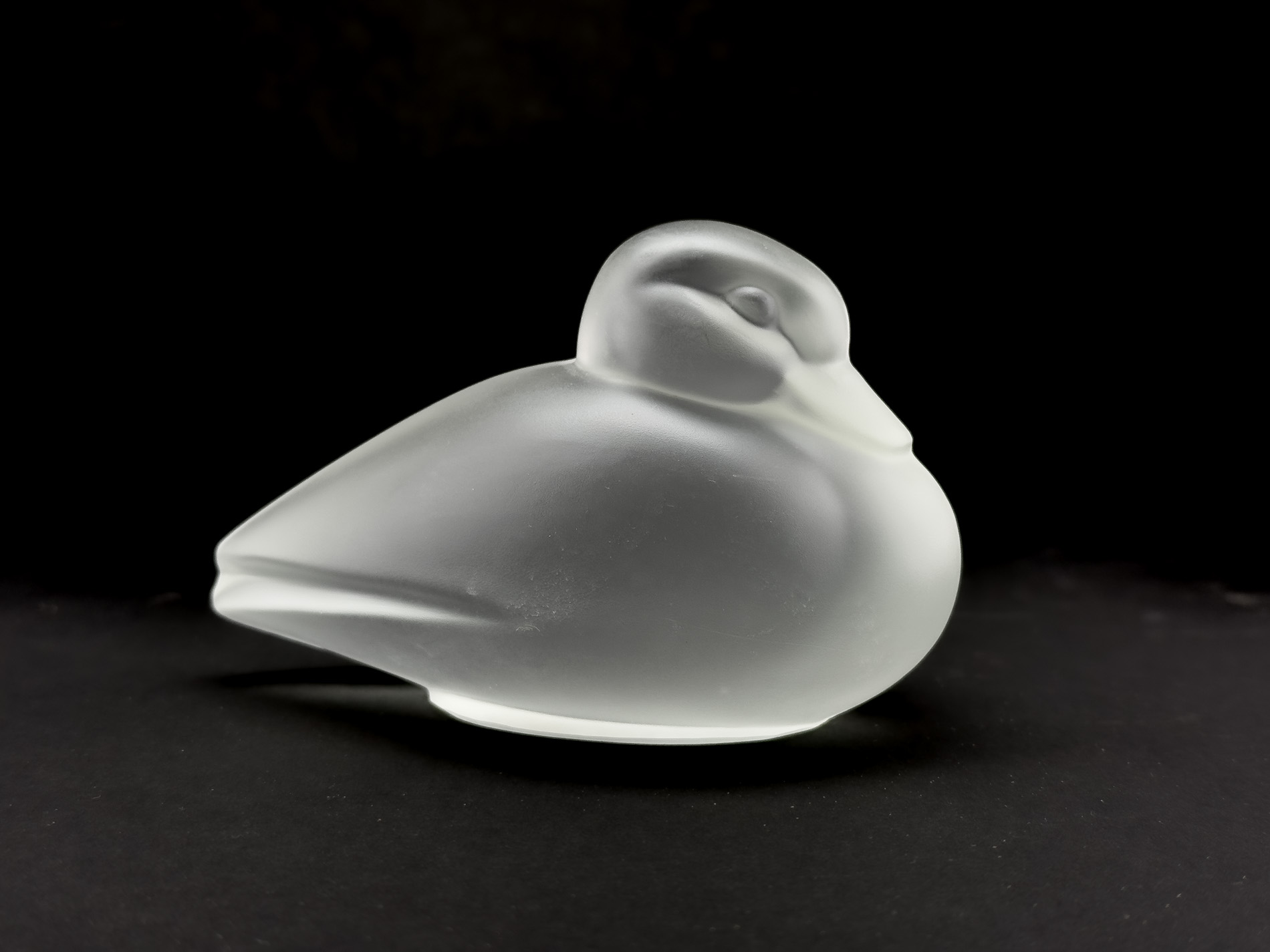
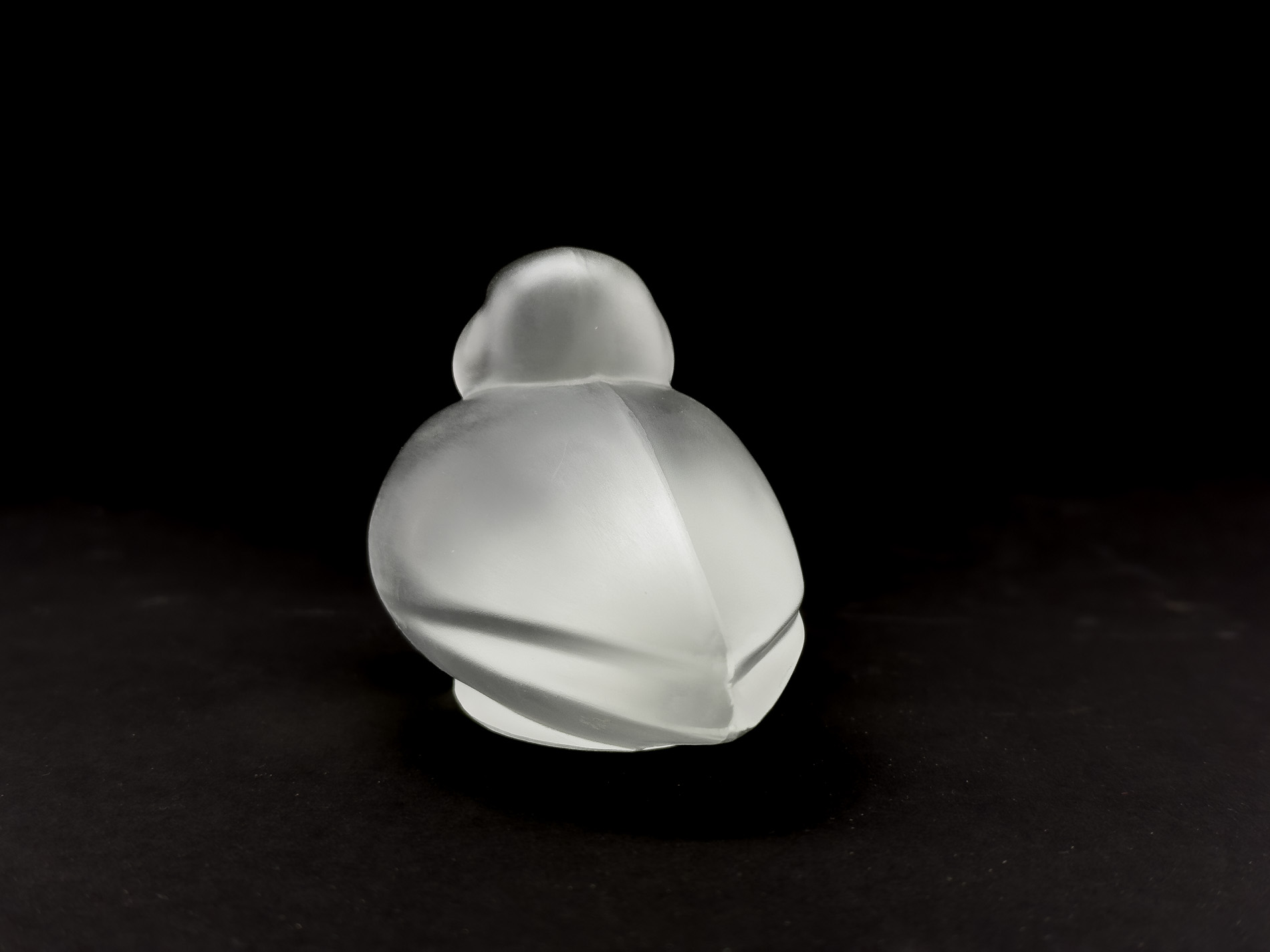
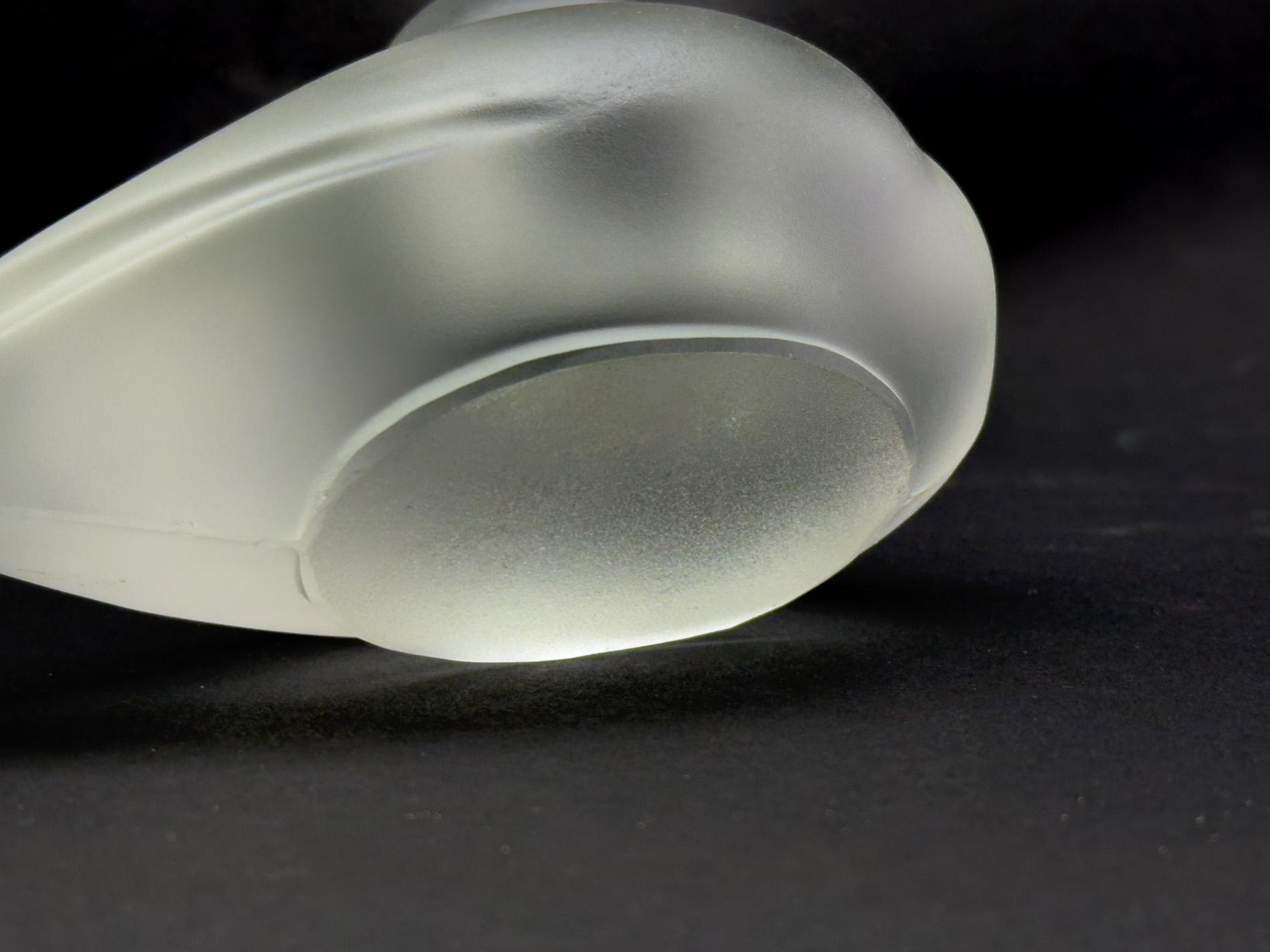
These two satin-finished glass animal figures by Lucienne Bloch date from the mid-20th century, a period in which she designed small, refined objects alongside her monumental art. The deer has a graceful, serene form and measures 19.5 cm in width, 11 cm in height, and 6 cm in depth. The duck is more compact and playful in character, measuring 13 cm wide, 8 cm high, and 8 cm deep. Together, they demonstrate Bloch’s sensitivity to style and humor, showing how she used simple forms and satin glass to give animals a timeless and charming presence.
In 1929, Bloch was invited to work as the first female designer at the Glasfabriek Leerdam, later known as Royal Leerdam Crystal, one of the most renowned glass factories in the Netherlands. During this brief but significant period, she developed a series of pressed, satin-finished glass designs with clear Art Deco influences. Her animal figures became popular design objects and remained in production well into the 1970s, securing their place in the history of modern Dutch glass design.
Deer
19,5 cm width
11 cm high
6 cm deep
450,- euro
Duck
13 cm width
8 cm high
8 cm deep
250,-